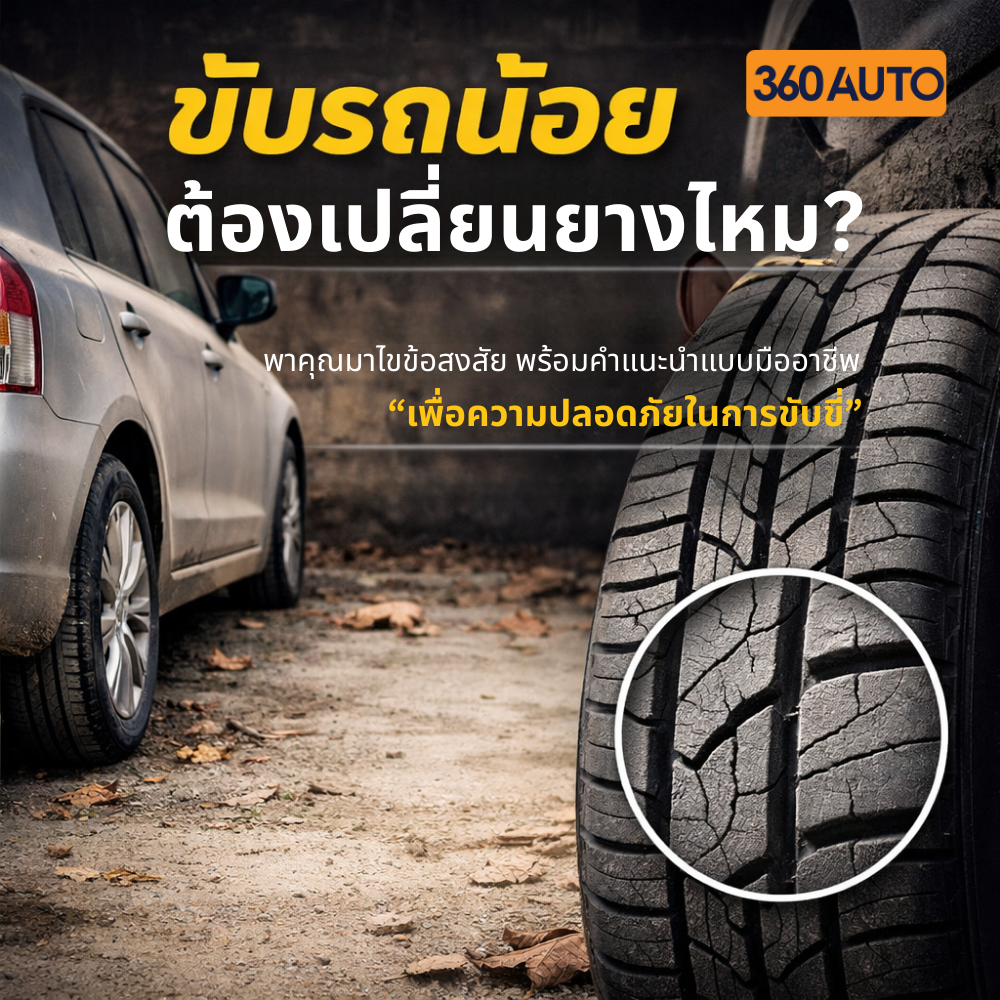
Driving Less Means Tires Don’t Wear Out — So No Need to Change Them?
The answer is not always ❗
Tire replacement is not based solely on tread wear. Other critical factors play an important role, such as tire age, rubber compound condition, and storage or parking environment.
Even if you drive very little, tires naturally deteriorate over time. Tires are made from natural and synthetic rubber, which gradually harden and lose elasticity as they age — regardless of how many kilometers you drive.
Tire Age Matters More Than You Think ⏳
Most tire manufacturers recommend:
-
Unused new tires have a shelf life of up to 5 years from the manufacturing date
-
Tires already in use should typically be replaced within 3–5 years
Even if you only drive a few thousand kilometers per year, once tires reach 4–5 years old, their performance declines noticeably, especially in braking, wet-road grip, and water evacuation.
How to Check Tire Manufacturing Date (DOT Code)
Look for the DOT code on the tire sidewall. The last four digits indicate the production date. For example:
-
DOT 3522 = Manufactured in week 35 of the year 2022
If your tires were produced several years ago, they may already pose safety risks — even if the tread depth still looks good.
The Hidden Effects of Leaving Your Car Parked for Long Periods 🚘
Cars that are rarely used often experience tire issues more frequently than expected, such as:
-
Flat spots caused by the vehicle’s weight resting on one position for too long
-
Hardened rubber, leading to reduced traction
-
Cracks or dry rot on the sidewall or tread surface
Vehicles parked outdoors, especially under direct sunlight or high temperatures, are even more prone to accelerated tire deterioration.
Warning Signs You Should Change Your Tires — Even If You Drive Less ⚠️
If you notice any of the following, it’s strongly recommended to replace your tires immediately:
-
Visible cracks or dry rot on the sidewalls
-
Hard rubber that no longer feels flexible when pressed
-
Excessive vibration or unusual noise while driving
-
Reduced grip or slippery feeling, especially on wet roads
-
Tires older than 5 years
Waiting until a tire fails or blows out can lead to serious accidents and far higher costs than preventive replacement.
How to Take Care of Tires If You Rarely Drive
If you are an infrequent driver, proper tire care can significantly extend tire life and maintain safety.
✅ Move the car at least once a week
This helps prevent flat spots and allows the tires to regain their shape.
✅ Check tire pressure regularly
Tires on parked vehicles can lose air over time. Always maintain pressure at the manufacturer’s recommended level.
✅ Avoid long-term parking under direct sunlight
Heat and UV exposure are major enemies of tire rubber.
✅ Rotate tires every 6–10 months
Even with low mileage, tire rotation helps ensure even wear and balanced performance.
What Kind of Tires Should Low-Mileage Drivers Choose?
If you don’t drive often, consider tires that:
-
Are newly manufactured, not old stock
-
Prioritize comfort, low noise, and safety
-
Come with proper warranty and quality assurance
At 360auto.online, you can choose from a wide range of leading tire brands, receive expert recommendations, and enjoy professional installation at service centers near your home nationwide.
Conclusion: Driving Less Doesn’t Mean Ignoring Tire Safety
Even if you rarely drive, tires still deteriorate with age and environmental exposure. Once tires reach 4–5 years old or show signs of damage, replacing them is a smart investment in your safety and peace of mind — for you and your loved ones ❤️
If you’re unsure whether your current tires are still safe, you can easily check, compare, and purchase new tires at 360auto.online.
👉 Easy tire selection • 0% installment plans 👉 Convenient installation near your home 👉 Trusted quality equivalent to authorized service centers
Don’t let “driving less” become a hidden risk on the road.